Source Iron Oxide Green for Paint, Plastic, and Ceramic Uses
Find 30 verified listings for construction material iron oxide green suitable for paint, plastic, and ceramic applications. Buyers can compare specifications, prices, and supplier details for industrial-grade pigments sourced from China.
Key considerations
Products List





Comprehensive Sourcing Guide
Strategic Sourcing Guide for Construction Material Iron Oxide Green
Procuring iron oxide green for construction applications requires a nuanced understanding of the specific chemical properties, supply chain dynamics, and quality assurance protocols inherent to this class of inorganic pigments. While the core keyword suggests a singular product, the market reality involves a complex array of synthetic and natural variants, each with distinct performance characteristics. This guide synthesizes available product attributes and industry standards to provide a disciplined framework for B2B buyers. The objective is to navigate the procurement process with precision, ensuring that the selected material meets the rigorous demands of construction environments without relying on unverified marketing claims.
Technical Specifications and Chemical Identity
The foundation of any successful procurement strategy lies in the precise definition of technical specifications. Iron oxide green is not a monolithic substance but rather a composite or specific chemical variant, often derived from the interaction of iron oxide yellow and iron oxide blue, or through specific synthetic processes. Buyers must first distinguish between the classification of the material. Available data indicates that the product falls under the classification of "Iron Oxide" and is categorized as an "Amphoteric Oxide." This chemical nature is critical for construction applications where the pigment may be exposed to varying environmental pH levels.
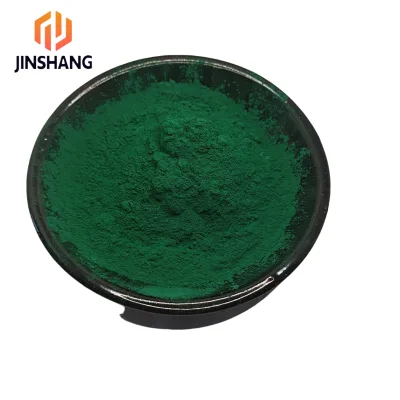
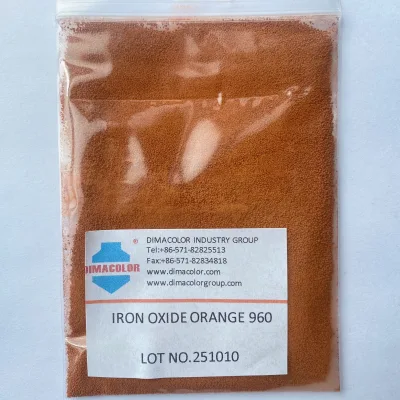
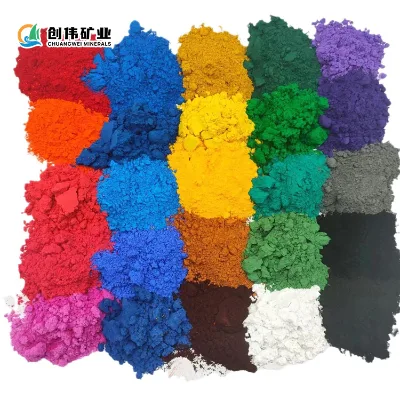
The physical appearance of the material is a primary verification point. While some listings describe the appearance as "Orange" or "Red Powder," the specific requirement for "Green Pigments" necessitates a product that exhibits a "Green" color profile. The data also notes a "Red, Green" color capability and a broader spectrum including "Violet, Yellow, Orange, Blue, Red, Green, Brown, Black, White." For a construction material, the specific shade of green must be consistent. The physical state is consistently described as "Powder," with a specific density noted at 5.24 g/cm³. This high density is a key factor in calculating volumetric requirements for large-scale construction projects.
Chemical composition is equally vital. The product is identified as an "Oxide" with the CAS number 1332-37-2, which is the standard identifier for Iron Oxide. The molar mass is recorded as 159.70 g/mol. However, buyers must exercise caution regarding purity claims. The observed data lists purity levels ranging from 94% to 99.5%, with specific standards noted as 88%, 96%, and 95%. In construction, the specific grade standard is often "Industrial Grade," but the exact percentage of the active iron oxide component must be verified against the project's technical specifications. The pH value is another critical parameter, with observed ranges between 3.0 and 7.0, and 3.5 to 7.0. This acidity range must align with the binder systems used in the construction application to prevent chemical incompatibility.
Compliance, Certification, and Safety Standards
In the construction sector, compliance is not merely a formality but a legal and safety imperative. The product is described as "Non-Toxic," which is a significant advantage for materials used in environments where human exposure is possible. However, the term "Non-Toxic" must be backed by specific certification documents relevant to the jurisdiction of the construction project. The data mentions "First Class" quality, but this is a qualitative observation rather than a certified standard. Buyers should verify if the product meets international safety standards such as REACH or specific national building codes regarding heavy metals and volatile organic compounds.
The "Odorless" or "Oderless" (as observed in the data) nature of the pigment is a positive attribute for indoor construction applications, ensuring that the material does not emit unpleasant smells during mixing or curing. The "Volatile" content is listed as ≤1.0, which suggests low emissions, but this figure must be confirmed through independent laboratory testing for the specific batch. Furthermore, the product is noted to have "Heat-Resistance" and "Acid Alkal" resistance features. These properties are essential for construction materials that may be subjected to extreme weather conditions or chemical exposure. Buyers should request test reports that specifically validate these resistance claims under the specific environmental conditions of the project site.
It is important to note that while the data mentions "Natural" and "Synthetic" types, the compliance requirements differ. Synthetic iron oxides often undergo more rigorous purification processes, potentially offering higher consistency in color and purity. Natural variants may contain trace impurities that could affect performance. The "Feature" list includes "Bright-Colored Exquisite Powder," which is a marketing observation. Compliance verification should focus on the "Grade Standard" being "Industrial Grade" and ensuring that the specific batch meets the required purity thresholds (e.g., 96% or 99.5%) as defined by the project specifications.
Cost Drivers and Pricing Dynamics
The pricing of iron oxide green is influenced by several variables, including the raw material source, the manufacturing process, and the specific grade. The observed price range in the market is broad, spanning from $0.32 to $1600. This wide variance indicates that the unit price is highly dependent on the quantity purchased, the purity level, and the specific form of the pigment. For construction projects, the cost per kilogram is the primary metric, but the total cost of ownership includes logistics and handling.
The Minimum Order Quantity (MOQ) is a significant cost driver, with observed ranges from 1 to 5000 units. For large-scale construction projects, negotiating a lower MOQ per unit through bulk purchasing is essential. The data suggests that "Customization" is available, which can impact the price. Customized packaging or specific color formulations may incur additional costs. The "Production" speed is described as "Very Fast," and shipping times are noted as "10 Days," which can influence the overall project timeline and associated costs.
Packaging also plays a role in cost efficiency. The standard packing is listed as "25 Kgs/Bag(S)" or "25kg PP Bag," with options for "1ton/Bag." Bulk packaging reduces the cost per unit of packaging material and minimizes handling time on-site. However, the "Packing: Customize" option allows for tailored solutions that might reduce waste or improve storage efficiency. Buyers should calculate the total landed cost, including the base price, shipping fees, and any customs duties, to determine the true cost driver for their specific project.
Typical Applications in Construction
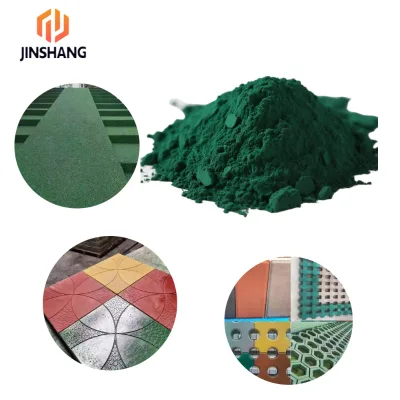
Iron oxide green finds extensive use in the construction industry due to its stability and colorfastness. The data lists a wide array of applications, including "Textile, Paper, Leather, Ink, Paint, Plastic, Food, Cosmetic, Ceramic." For construction, the most relevant applications are "Paint," "Plastic," "Ceramic," and potentially "Leather" for interior finishes. The pigment is used to color concrete, asphalt, roofing tiles, and architectural coatings. The "Usage" field explicitly mentions "Textile, Paper, Leather, Ink, Paint, Plastic, Food, Cosmetic, Ceramic," confirming its versatility.
The "Application Material" is noted as "Natural Silk," which might seem unrelated to construction, but it highlights the pigment's compatibility with various organic and inorganic matrices. In construction, the pigment is often incorporated into polymer-based coatings or cementitious matrices. The "Type" can be "Synthetic" or "Natural," and the choice depends on the required color intensity and chemical resistance. Synthetic types are generally preferred for high-performance construction coatings due to their uniform particle size and higher purity.
The "Feature" of being "Heat-Resistance" makes the pigment suitable for exterior applications where the material is exposed to direct sunlight and high temperatures. The "Acid Alkal" resistance ensures that the color remains stable even in environments with varying pH levels, such as areas with acid rain or alkaline concrete substrates. The "Tinting Strength" of 98~102% indicates a high efficiency in coloring, meaning less pigment is required to achieve the desired shade, which can reduce material costs.
Supplier Evaluation and Sourcing Strategy
Evaluating suppliers requires a systematic approach to ensure reliability and quality. The data indicates that the "prod_origin" is "China," with specific locations mentioned as "Hebei, China." While this provides a geographical context, buyers should not rely solely on origin but must verify the supplier's track record. The "Customization: Available" attribute suggests that suppliers are flexible, but this flexibility must be managed through clear contractual agreements.
When evaluating suppliers, buyers should look for those who can provide detailed technical data sheets (TDS) and certificates of analysis (CoA). The "Quality: First Class" claim should be substantiated by third-party testing. The "Advantage" of "Bright-Colored Exquisite Powder" is a subjective observation; objective verification through color matching and consistency tests is necessary. The "Shipping: 10 Days" and "Production: Very Fast" attributes suggest a responsive supply chain, but buyers should confirm these lead times for their specific order volume.
The "prod_model" is listed as "825, 835" and "Iron Oxide," which are specific identifiers. Buyers should ensure that the supplier can consistently supply these specific models or their equivalents. The "Standard" values of "110, 120, 130" may refer to specific product grades or performance metrics. It is crucial to verify what these numbers represent in the context of the supplier's product line. The "Purity" levels of 94%, 96%, and 99.5% offer different tiers of quality, and the supplier should be able to provide the specific purity level required for the project.
Quality Control and Long-Term Procurement
Quality control is paramount in construction procurement to prevent failures and ensure longevity. The "Volatile" content of ≤1.0 and the "pH Value" range must be monitored in every batch. Buyers should implement a sampling and testing protocol to verify that the incoming material matches the specified parameters. The "Tinting Strength" of 98~102% is a critical quality metric that should be tested regularly to ensure color consistency across different batches.
Long-term procurement considerations include the stability of the supply chain and the ability of the supplier to scale production. The "Production: Very Fast" attribute is a positive indicator, but buyers should assess the supplier's capacity to handle large orders without compromising quality. The "Customization" option allows for long-term partnerships where the supplier can adapt to changing project needs. However, this should be balanced with the risk of supply chain disruptions.
The "Feature" of "Non-Toxic" and "Heat-Resistance" ensures that the material remains safe and effective over the lifespan of the construction project. Buyers should also consider the environmental impact of the pigment, particularly if the project aims for green building certifications. The "Composition: Oxide" and "Type: Synthetic" or "Natural" should be documented for environmental compliance.
Comparative Analysis of Product Attributes
To facilitate decision-making, the following table summarizes the key attributes observed in the market data for iron oxide green, highlighting the variations that buyers must navigate.
| Attribute Category | Observed Values | Procurement Implication |
|---|---|---|
| Classification | Iron Oxide, Amphoteric Oxide | Determines chemical compatibility with binders. |
| Appearance | Green, Red Powder, Powder, Orange | Must match project color specifications exactly. |
| Purity | 94%, 96%, 99.5% | Higher purity often correlates with better color strength. |
| Grade Standard | Industrial Grade | Confirms suitability for construction use. |
| pH Value | 3.0 | Critical for preventing chemical reactions in concrete. |
| Density | 5.24 g/cm³ | Affects volumetric calculations for mixing. |
| Packing | 25kg PP Bag, 1ton/Bag, Customize | Impacts logistics and on-site handling efficiency. |
| Origin | China, Hebei, China | Influences shipping costs and lead times. |
| Features | Non-Toxic, Heat-Resistance, Acid Alkal | Essential for durability and safety compliance. |
Conclusion
Sourcing iron oxide green for construction materials requires a meticulous approach that balances technical specifications, compliance requirements, and cost efficiency. The market offers a diverse range of products with varying purity levels, chemical properties, and packaging options. Buyers must verify the "Industrial Grade" status, confirm the "Non-Toxic" and "Heat-Resistance" claims through testing, and ensure that the "pH Value" and "Tinting Strength" align with project needs. By focusing on these evidence-based criteria and avoiding unverified claims, buyers can secure a reliable supply of high-quality iron oxide green that meets the rigorous demands of the construction industry. The flexibility of "Customization" and the "Very Fast" production capabilities of suppliers offer opportunities for strategic partnerships, provided that quality control remains the top priority throughout the procurement lifecycle.
FAQs
What is the chemical classification of construction material iron oxide green?
The product is classified as an Iron Oxide and categorized as an Amphoteric Oxide. This chemical nature allows it to withstand varying environmental pH levels, making it suitable for construction applications where exposure to different conditions occurs.
How is the physical appearance of the pigment described in specifications?
The material is consistently described as a Green Powder with a density of 5.24 g/cm³. While some listings mention other colors, the specific requirement for construction is a green profile that remains stable as a fine powder.
Which purity levels are available for industrial grade iron oxide green?
Available purity levels include 94%, 96%, and 99.5% depending on the specific product standard. Buyers must verify the exact percentage against project specifications, as the observed data lists standards ranging from 88% to 99.5%.
Can the product be customized for specific packaging requirements?
Yes, customization is available for packaging and specific color formulations. Standard packing is 25kg PP Bag or 1ton/Bag, but tailored solutions can be arranged to reduce waste or improve storage efficiency on-site.
What are the key safety features of this construction pigment?
The pigment is non-toxic, odorless, and heat-resistant with acid-alkali resistance. These features ensure safety for human exposure and stability in environments subject to extreme weather or chemical exposure during construction projects.
How long is the typical lead time for shipping this material?
The observed shipping time is approximately 10 days from the point of order. Production speed is noted as very fast, but buyers should confirm specific lead times for their order volume to ensure project timelines are met.
Which countries are the primary origins for this iron oxide product?
The product origin is listed as China, with specific locations including Hebei. Buyers should verify the supplier's track record in these regions while ensuring the material meets international safety standards for their specific jurisdiction.